CVSA inspectors are focusing on brake drums and rotors this year, and neither one can be checked through a layer of caked road grime. A clean wheel end is how you find a cracked drum before an inspector does. At Rochester Premium Cleaners we bring fleet washing to your yard, undercarriage included, so your pre-trip inspection can actually see something.
Washing a truck does not fix its brakes. It does decide whether anyone can spot the problem in time.
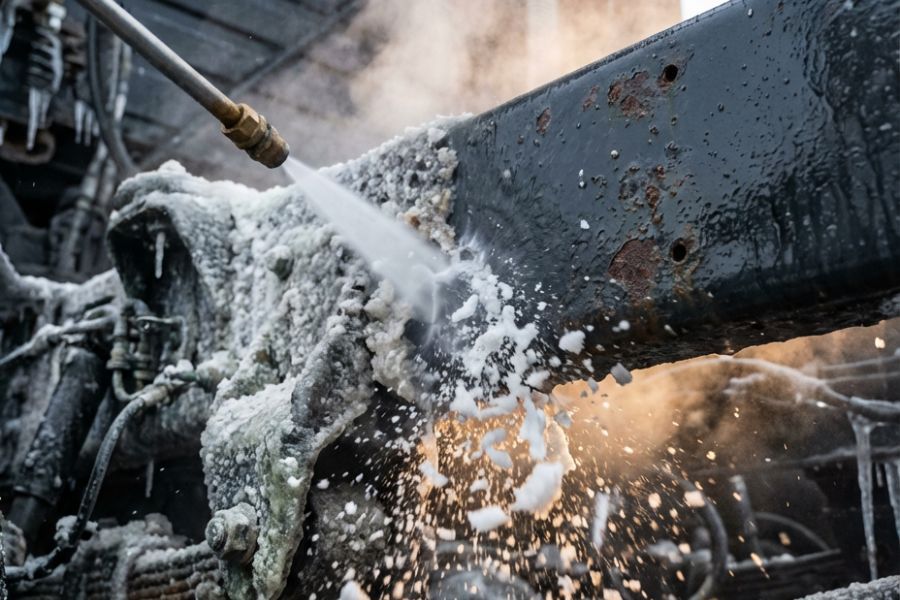
Packed buildup like this sits over the exact components an inspector checks.
What's Different About Brake Safety Week This Year
Brake Safety Week runs August 23 through 29 across the United States, Canada, and Mexico, and the 2026 emphasis is on brake drums and air disc brake rotors. Vehicles with brake-related out-of-service violations get parked until the repair is done.
The numbers behind it are steady year to year. More than 15,000 vehicles were inspected during last year's campaign, and 15.1 percent came off the road for brake violations.
That's roughly one in seven. You can read the announcement on the CVSA website.
Brakes stay near the top of the violation tables year after year. Six of the top twenty vehicle violations recorded by FMCSA last year involved defective, worn, or out-of-adjustment brakes, and brake problems accounted for close to a quarter of all out-of-service violations during the last International Roadcheck.
What matters for a fleet manager is where inspectors are pointing. Drums and rotors sit at the wheel end, down in the part of the vehicle that collects everything the road throws at it.
Why Road Grime Turns Into an Inspection Problem
Inspectors check visible portions of the drum and rotor for cracks, wear, and metal-to-metal contact, and packed grime hides every one of those signs. The defect is still there. It just goes unfound until someone with a flashlight and a clipboard finds it first.
Drivers get told to check drums and rotors during pre-trip and post-trip inspections. That instruction assumes the components are visible.
On a truck that has spent a summer on construction routes and gravel shoulders, they often aren't. A hairline crack running from the outer edge of a drum disappears under a quarter inch of packed dirt, and so does the grooving that tells you a shoe has been riding metal on metal.
Here is what inspectors are looking at on drums and rotors this year:
- Thickness measured against the manufacturer's minimum specification
- Cracks, particularly ones running from the outer edge toward the mounting holes
- Grooving that shows a shoe has been riding metal on metal
- Rotors worn far enough that the center vents are exposed
- Heavy rust across the whole friction surface, which is read as an inoperative brake
Every item on that list is a visual check. Every one of them is defeated by packed dirt.
Nobody is arguing that a dirty truck causes brake failure. The point is narrower. A dirty wheel end removes your chance to catch the failure before it costs you a vehicle for a day.
What Last Winter Left on Your Rotors
Heavy rust across the entire friction surface of a rotor is treated as a sign of an inoperative brake, and salt exposure from winter is what drives that corrosion. August is when you find out what March did.
Chloride keeps working long after the roads clear. A rotor that sat through salt season with buildup packed around it holds moisture against bare metal for months.
By late summer that shows up as corrosion on parts of the wheel end that should be bright from use. Wash it off and you learn which rust is cosmetic. You also learn which rust is sitting on a friction surface that should have worn clean by now.
What Washing Does, and What It Doesn't
Washing makes brake components inspectable, and that's the entire claim. It doesn't adjust a brake, replace a drum, or make a non-compliant vehicle compliant. Anyone telling you otherwise is selling something they can't deliver.
Here's the honest sequence. Wash the wheel ends, then look at what you can finally see, then send the units with real problems to your mechanic before the twenty-third.
That order matters. A fleet that washes and inspects in the same week catches its own violations. A fleet that skips it finds out at a roadside stop instead, with the vehicle already out of service and a driver waiting.
We photograph before and after on every job, so you have a record of what each unit looked like when we finished with it.
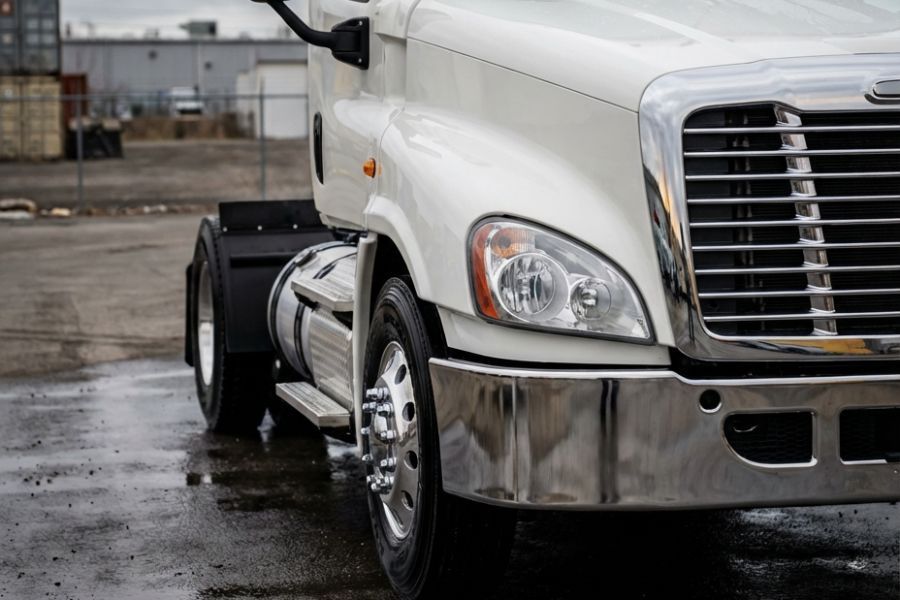
With the buildup gone, the hub and hardware are visible to whoever looks next.
You Have About Two Weeks
Washing and inspecting your fleet before August 23 leaves enough room to fix what you find. Wait until the week itself and any defect you turn up becomes downtime instead of maintenance.
Work backward from the date. Units washed and inspected this week leave a full week for parts and shop time.
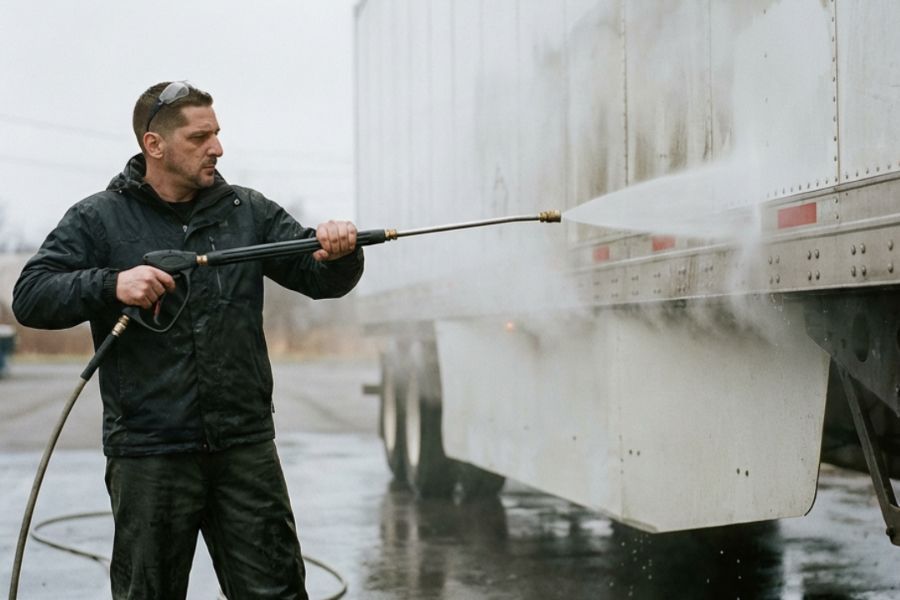
Washing happens at your yard, so no unit loses a shift travelling to a wash bay.
We come to your yard, so nothing has to leave the lot or lose driver hours to a wash bay. We handle day cabs, sleeper trucks, flatbed and enclosed trailers, box trucks, construction equipment, delivery vans, municipal vehicles, and utility rigs, and scheduling works around your operation including overnight and early morning. Fleets of five vehicles or more get volume pricing.
Frequently Asked Questions
Does washing my fleet help me pass a brake inspection?
Not by itself. Washing makes drums, rotors, and hardware visible so you or your mechanic can find defects before an inspector does. The repair still has to happen. What washing buys you is the chance to make it on your schedule.
How long does an undercarriage wash take per vehicle?
It depends on vehicle size and how much buildup is packed on. A unit washed regularly goes quickly. One that hasn't been done since spring takes longer, since packed grime has to come off rather than rinse off.
Can you wash our fleet before August 23?
Call and we'll tell you honestly what's open. Scheduling gets tight the week before an enforcement campaign, and we'd rather give you a real date than a hopeful one.
Do you wash construction equipment too?
Yes. Construction fleets pick up more packed material than highway units, and that buildup hides the same components inspectors look at. We service equipment on site alongside trucks and trailers.
Get on the Schedule Before the Twenty-Third
Rochester Premium Cleaners washes fleets on site across Rochester and the surrounding 50-mile radius. See our full service area.
Call 585-350-5751 or request a free quote.