
Most restaurant hood filters need cleaning at least once a week, and busy kitchens need it every day. The right schedule follows your grease, so it shifts when your volume does. At Rochester Premium Cleaners, our IKECA and OSHA-10 trained crews soak the filters on every Rochester-area hood job. Restaurant hood filter cleaning between those visits falls to your staff.
That second job matters more than it looks. Filters are the piece of the hood's fire protection your own people control, and they sit between every flare-up on the line and the grease already in your duct.
Filters this coated catch less, so more grease moves on toward the duct.
How Often Should Restaurant Hood Filters Be Cleaned?
Clean hood filters at least weekly, and daily if your line runs fryers or woks hard. Insurance and manufacturer guidance lands in that same range. Where your kitchen lands depends on your own grease, so the schedule worth trusting is one you've checked against a few real shifts.
Here's the check. Pull one filter at close for three or four nights running. If the baffles are already coated after a single shift, you're a daily kitchen, whatever the calendar says. If a film takes most of the week to build, weekly works.
NFPA 96 doesn't give filters their own calendar. It requires grease removal devices, filters included, to be cleaned before they get heavily coated with grease. In other words, the code sets the standard and leaves the schedule to you.
If your filters only come out when the hood crew shows up, they've gone months past the weekly minimum.
Why Do Filter Schedules Fall Behind in the Busy Season?
Filters load up in proportion to cooking volume, so a schedule set in a slow month runs short once the holiday rush starts. Parties and catering orders push more grease through the same hood. A routine written for a quieter month won't adjust itself.
That gap matters. Once the baffles are coated, they catch less and drain less, and more grease slips past into the plenum, the duct and the rooftop fan. A filter caked in grease can also burn.
So run the end-of-shift check again a few weeks before your busiest stretch, and switch to daily cleaning if the filters call for it. The cook who pulled filters every Monday in a slow month may need to pull them every night. A second set of filters helps, since one set can soak while the other works the line.
How Should You Clean Restaurant Hood Filters?
Soak filters in hot water and a kitchen degreaser, rinse them well, and let them drain before they go back in. Most stainless steel filters can then go through a commercial dish machine. Aluminum needs gentler handling, because strong chemicals left on too long can corrode it. Skip steel wool and bleach on either metal.
- Pull the filters once the line has cooled, and wear heavy gloves, since baffle edges can be sharp.
- Soak them in hot water with a kitchen degreaser, then scrub with a soft brush.
- Send them through the dish machine only after the soak, and only if the label allows it, because some aluminum filters are hand-wash only.
- Rinse, let them drain dry, and slide them back in with no gaps.
Direction matters on the way back in. Filters are built to drain grease down into the trough, and most are marked for which way they go. Set one in sideways and the grease runs where it was never meant to go.
Watch the sink, too. Scrubbing filters there with heavy degreaser sends that grease down the drain toward your grease trap and sewer line, which turns into its own problem.
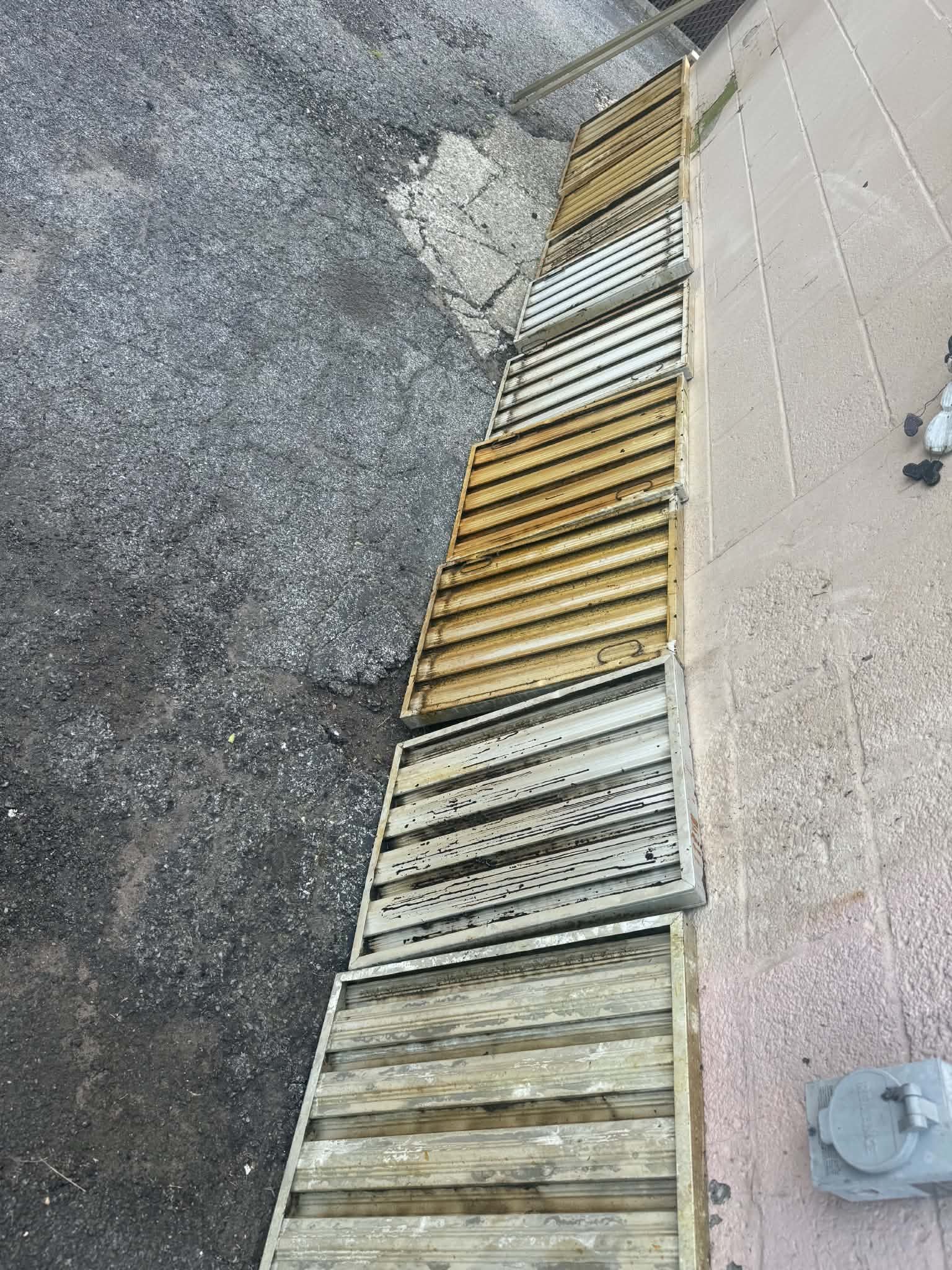
Filters go into a degreaser soak early in every RPC hood job, before the crew scrapes the hood interior.
When Should You Replace a Hood Filter?
Replace a hood filter as soon as it can't sit tight in its slot or can't do its job, whatever its age. That covers bent baffles, warped frames, holes and corrosion. NFPA 96 calls for filters rigid enough to hold their shape through normal use and cleaning, so a bent one is out of spec.
Gaps are easy to miss. The code requires all exhaust air to pass through the filters. A bent filter or an empty slot lets grease-laden air, and flame, slip around them.
A National Fire Academy training bulletin on grease filters spells out what a listed filter is tested to do. It has to pull grease out of the air, drain it without dripping it back onto the cooking surface, and limit how far flame can push through toward the duct. A damaged filter can't be trusted with any of that.
Mesh filters are their own case. Mesh grease filters are commonly sold with a note that they don't meet NFPA 96. If your hood still runs them, swap them for listed baffle filters.
When you buy replacements, match the size of the old filter and check for the UL 1046 mark on the frame. A filter without that listing isn't a code filter, however well it fits.
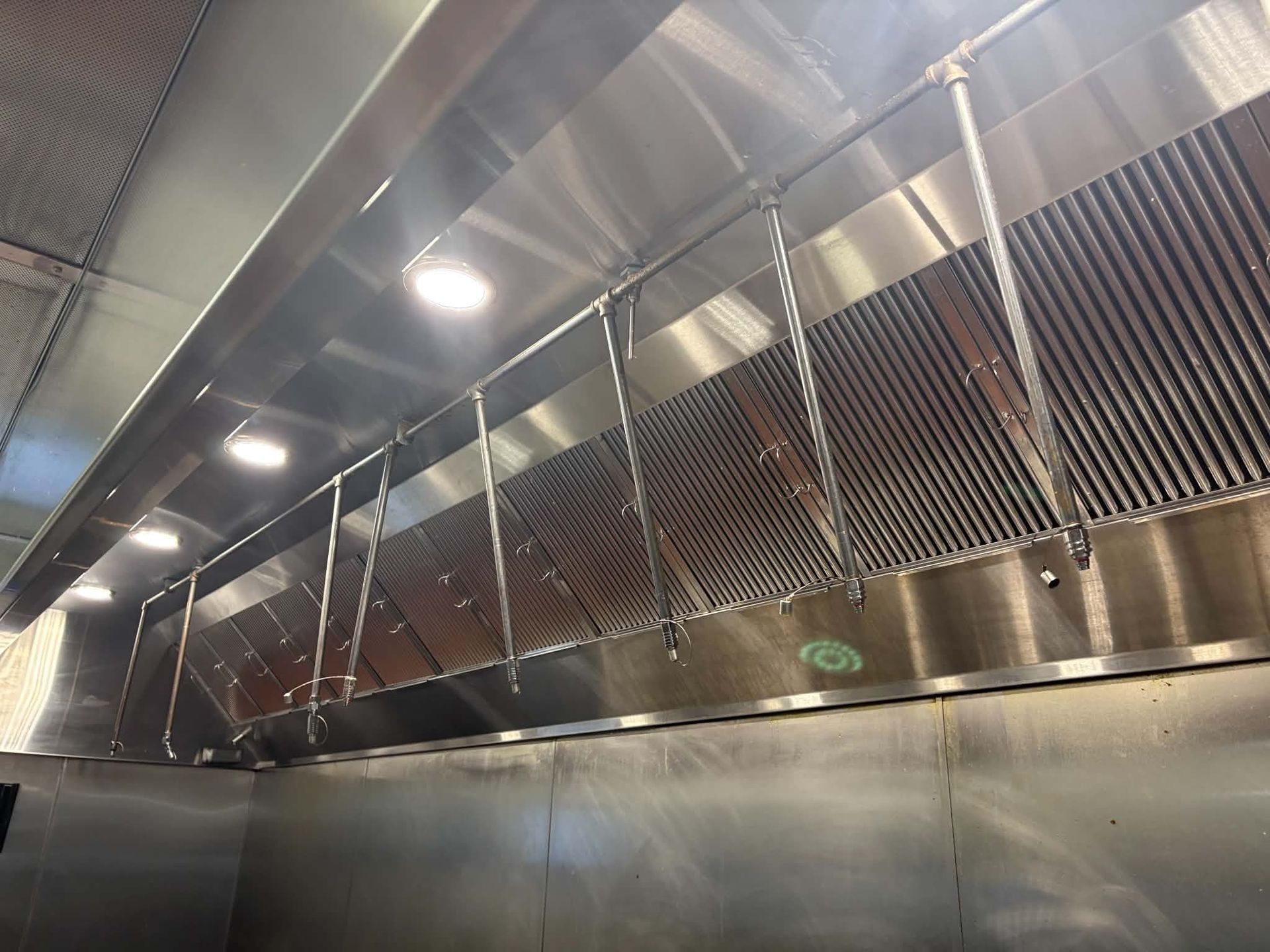
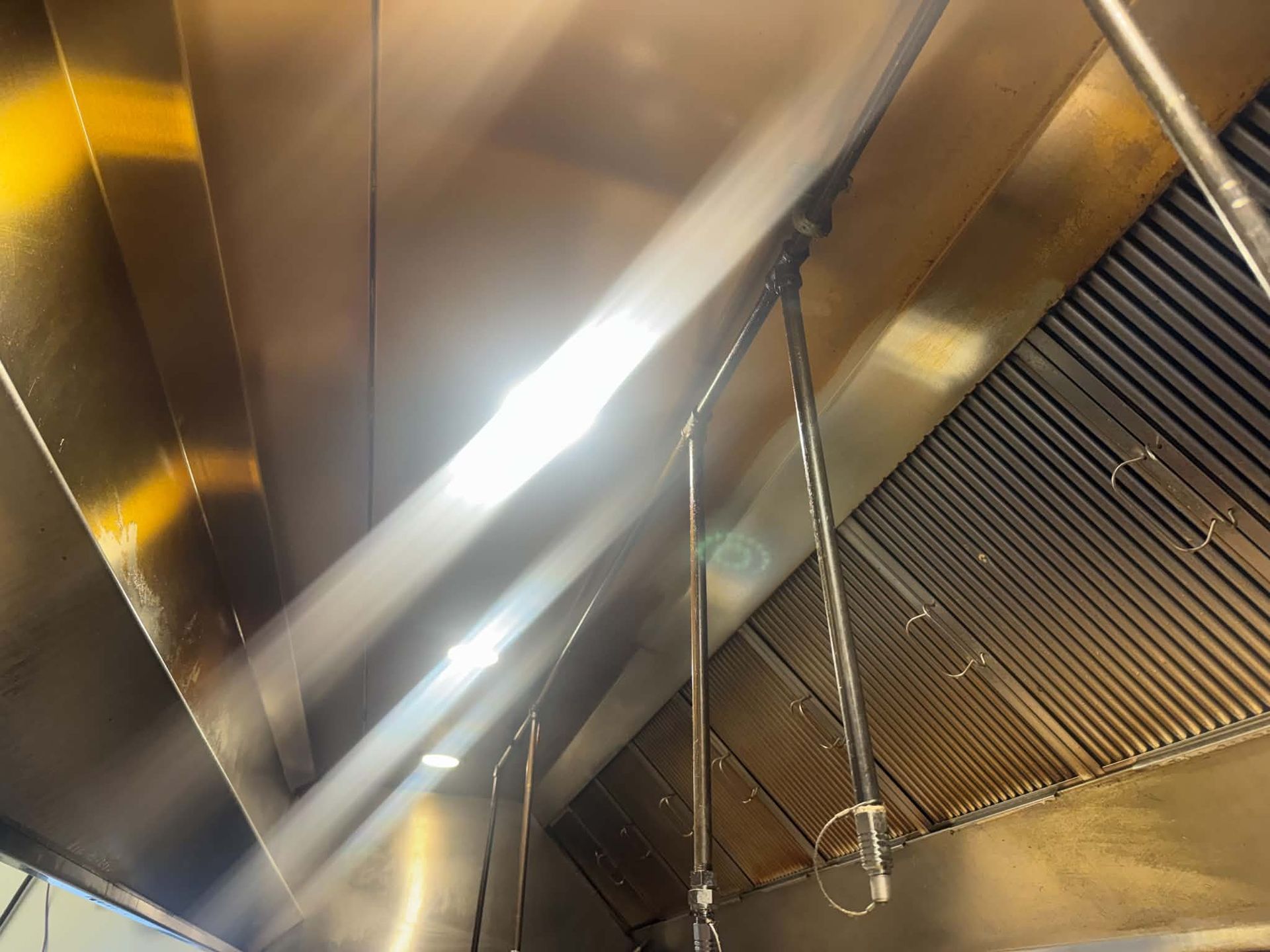
Seated tight and edge to edge, so every bit of exhaust air has to pass through a filter.
Where Does Filter Cleaning Stop and Hood Cleaning Start?
Filter cleaning keeps grease out of the system between visits, and a full hood cleaning removes what gets past the filters anyway. Your staff handle the filters on your kitchen's schedule. A certified crew handles the hood, ducts and rooftop fan on the NFPA 96 schedule, and neither job covers for the other.
On every hood job, our crew pulls the filters and soaks them in a commercial degreaser before cleaning the hood interior, the ducts to the roofline and the rooftop fan. Every job ends with a photo report and a compliance tag showing the service date and the next recommended cleaning.
Not sure how often your whole system needs that visit? Our guide to restaurant hood cleaning requirements walks through the four NFPA 96 tiers. Plenty of owners add equipment detailing to the same after-hours visit, so the hood and the cook line both get done in one night.
Frequently Asked Questions
Can restaurant hood filters go in the dishwasher?
Most stainless steel baffle filters can, once a soak has taken off the heavy grease. Aluminum filters vary by maker, and some are marked hand-wash only, so check the label first.
Is it okay to cook with a hood filter missing?
No. NFPA 96 requires all exhaust air to pass through the grease filters, so an empty slot is both a code problem and an open path for flame. Replace a damaged or missing filter before the next service starts.
Do dirty hood filters affect airflow?
Yes. A filter clogged with grease restricts airflow, so the hood pulls less smoke and heat off the line and the fan has to work harder.
Are stainless steel or aluminum hood filters better?
Stainless steel generally lasts longer and holds up better to dish machines and degreasers. Aluminum is lighter and easier to handle. Either one works if it's UL 1046 listed and sized to your hood.
Book Your Hood Cleaning Ahead of the Busy Season
Start the holiday rush with a clean system and a filter routine sized to your volume. Rochester Premium Cleaners serves kitchens throughout our Rochester service area, within about 50 miles of the city, with no trip fee inside Monroe County. We work after close, so your line doesn't lose a shift.
Call 585-350-5751 or request a free quote.


