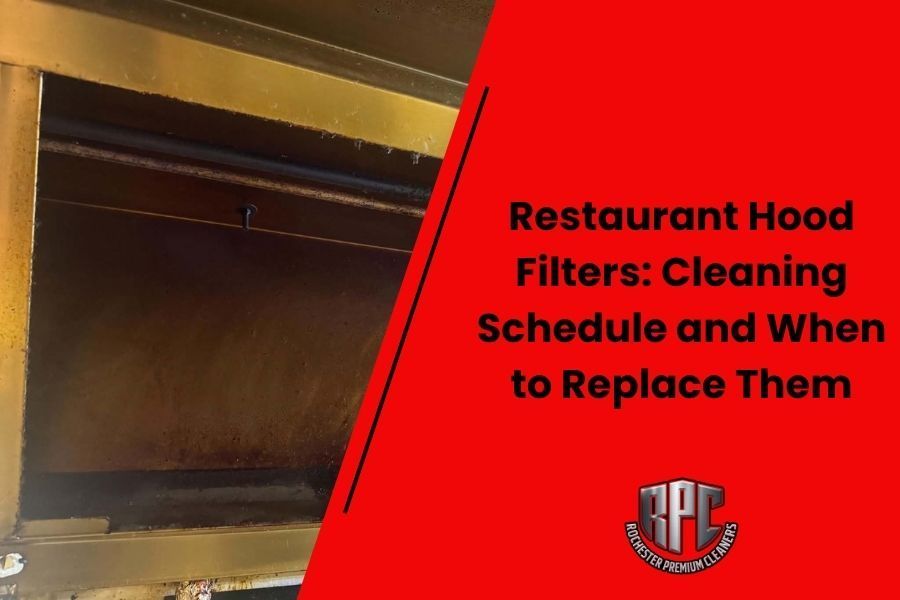
NFPA 96 sets how often your restaurant hood must be checked based on how much grease your kitchen makes, not its size. The code sets four tiers, from monthly to yearly, and plenty of owners sit on the wrong one. At Rochester Premium Cleaners, our IKECA and OSHA-10 trained crews clean to bare metal and log the work, because that NFPA 96 paper trail is what a fire marshal and your insurer both ask for. We handle restaurant hood and exhaust cleaning across the Rochester area.
Here's the part that trips people up. The code doesn't care whether you run a 40-seat diner or a 300-seat banquet hall. It cares about what comes off your cook line.
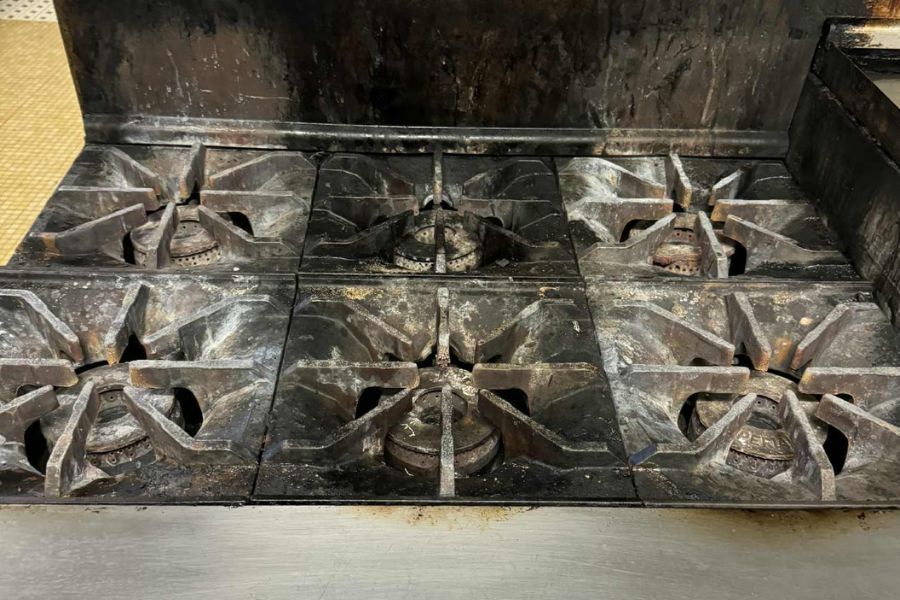
Grease that starts on the cook line ends up in the ductwork above it, which is where the code focuses.
What Does NFPA 96 Actually Require?
NFPA 96 is the national fire code for commercial kitchen exhaust systems, and it requires the whole system to be checked and cleaned on a set schedule. It covers the hood, the filters, the ducts, the fan, and the roof. The NFPA writes and updates the code. Almost every fire marshal and insurance policy in the country names it.
The word "system" matters. A clean hood means nothing if the duct behind it is coated.
Fire follows grease. When a flare-up on the range finds a greasy duct, it has a fuel path straight to the roof. That's why the code treats the whole run as one job, and why a wipe-down of the visible steel doesn't count. You can read the code on the NFPA 96 page.
How Often Must a Restaurant Hood Be Cleaned?
NFPA 96 sets four tiers based on the volume and type of cooking, from monthly to yearly. The busier your kitchen and the greasier your menu, the more often the code wants a look. This is the schedule that sets your legal duty. Most owners have never seen it.
| How often | Type of cooking | Typical kitchen |
|---|---|---|
| Monthly | Solid fuel, or very high volume | Wood-fired pizza, charcoal grills, BBQ smokehouses |
| Quarterly | Moderate to high volume | 24-hour kitchens, char-broiling, deep frying, wok cooking |
| Twice a year | Low to moderate volume | Most sit-down spots on a standard menu |
| Yearly | Low volume | Churches, day camps, seasonal kitchens, senior centers |
Two things in that table catch people out. Very high volume reaches monthly without any solid fuel. And deep frying sits in the quarterly band, which surprises owners who treat fryers as ordinary gear.
Picture a wood-fired spot sitting on a twice-a-year schedule. It's ten checks short of where the code puts it.
One more rule covers mixed kitchens. The higher-risk gear sets the schedule for the whole system. Add a charbroiler to a twice-a-year kitchen and the entire run moves to quarterly.
Which Edition of NFPA 96 Applies to You?
NFPA 96 gets revised every few years, and the schedule sits under a different table number depending on which edition your fire marshal has adopted. Older editions put it at Table 11.3 or 11.4. Newer ones moved it to Table 12.4. The four tiers have held, though recent revisions tightened the wording around busy and long-hours kitchens.
Your duty comes from the edition your fire marshal enforces, not the newest one printed. So when a vendor quotes a table number, ask which edition. A company that can't answer isn't tracking the code closely enough to keep you clear.
Checking Versus Cleaning: They're Not the Same
The table sets how often your system must be checked, and a cleaning is triggered when that check finds grease past the allowed depth. Owners collapse these two duties into one. The tiers say how often a trained crew has to look. What they find that day decides whether the system also gets cleaned.
In practice, most kitchens on a quarterly or twice-a-year tier need the cleaning every time. The grease is there.
The code uses a set grease depth rather than a judgment call. Past that point, the system has to be cleaned to bare metal. A trained crew measures it instead of eyeballing it, which is one more reason the paperwork matters.
What Does "Clean to Bare Metal" Mean?
Clean to bare metal means taking grease off every reachable surface until the metal underneath shows. Scraping the visible hood is nowhere near enough. A proper cleaning reaches the hood, the filters, the horizontal and vertical duct runs, the fan housing, and the rooftop catch.
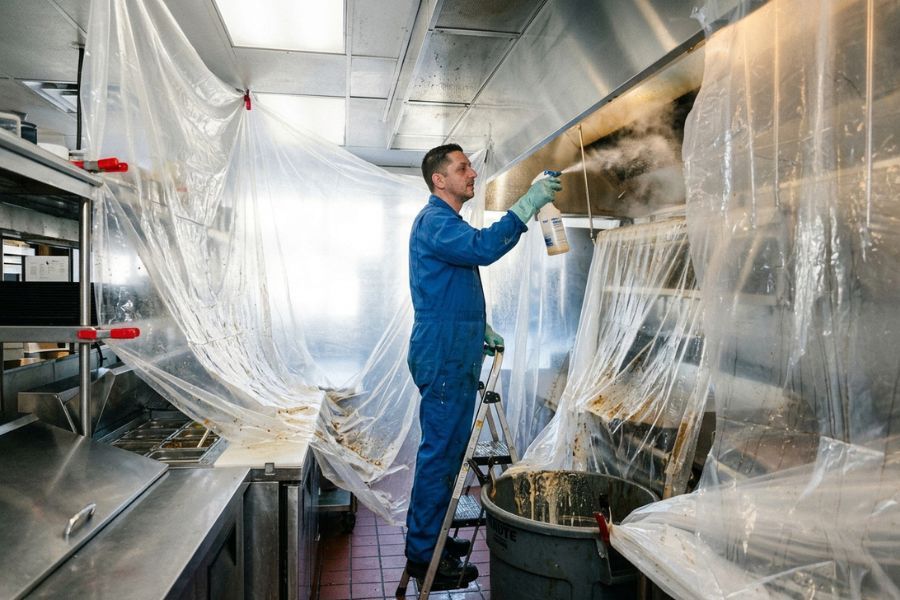
Sheeting protects the line while degreaser works on the hood, and the runoff drops into a barrel below.
Access is where corners get cut. Reaching the full duct run means opening panels or lifting the fan, and a crew without the right setup skips what it can't reach.
That skipped stretch is the problem. It's the part still holding fuel. The code says every inside surface has to stay reachable, so an old building with awkward ducts doesn't get a pass. It gets added access panels, which we handle as part of commercial kitchen cleaning.
What Paperwork Does the Code Require?
NFPA 96 requires the work to be done by a trained, qualified, certified company, and it names three records that must follow every job. Training matters because the code is exact about method, coverage, and measurement. The paperwork proves the work met that bar.
The three records:
- A dated label on the hood showing when the system was last serviced
- A tag near each access panel opened during the job
- A written report to the owner, usually within two weeks
Our techs carry IKECA and OSHA-10 training. After every job we leave the dated sticker, tag the panels we opened, and send a report with the scope of work and photos.
That paperwork does two jobs. At a check, it shows the fire marshal the system was serviced on time and to code. At claim time, it's the proof your insurer wants. Groups like the International Kitchen Exhaust Cleaning Association set the training bar behind that work and certify the crews doing it.
Can Your Fire Marshal Require More Than the Code?
Yes. NFPA 96 sets the floor, and your fire marshal can require cleaning more often if grease builds faster than your tier predicts. The code calls this official the authority having jurisdiction. Their read on your kitchen carries more weight than the table does.
Rochester restaurants answer to a local fire marshal who can show up on a complaint, after a remodel, or when the use of a space changes. We cover kitchens throughout our Rochester service area.
Your tier is a floor, never a ceiling. A kitchen that counts as twice-a-year can be ordered onto quarterly if an inspector finds heavy buildup. Hitting the minimum and still failing a check happens more than owners expect, and the fix is a shorter interval rather than a better argument.
What Happens If You're on the Wrong Schedule?
The wrong tier exposes you to failed checks, fire code citations, and a possible insurance denial if a grease fire happens off-schedule. The inspection risk shows up first. The insurance risk is the one that can close a business. Both trace to the same gap between your schedule and the one the code sets.
The numbers explain why marshals care. Federal fire data shows cooking is by far the top cause of restaurant fires, and NFPA research puts failure to clean behind roughly one in five kitchen fires.
A failed check brings citations and sometimes an order to stop cooking until the system is fixed. A dark kitchen bleeds revenue every night.
The insurance side is quieter and worse. Most kitchen policies name NFPA 96, and after a fire, investigators look at whether the system was cleaned to it. A prior passing check won't override proof of grease buildup. The records from each job are what protect you, which is why we treat them as part of the work.
Getting Your Rochester Kitchen on the Right Schedule
The fastest way to learn whether you're on the right tier is to have your cook line sized up against the code by a certified crew. We serve kitchens across Rochester and within a 50-mile radius. Marshals want proof, and proof means dated records tied to the right tier.
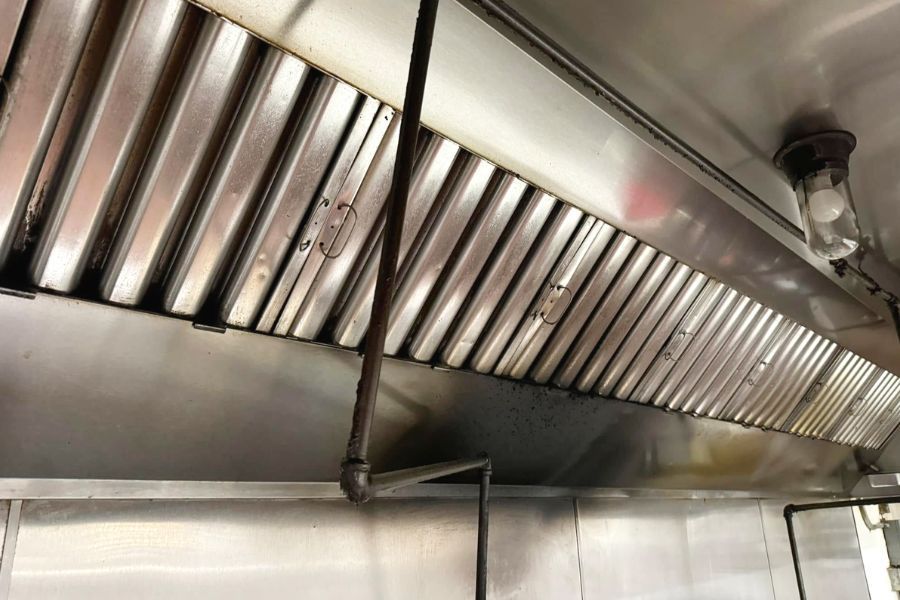
Baffle filters seated back in place after the hood, ducts, and fan were cleaned to bare metal.
We match your kitchen to its tier based on what you cook and how much, then set a schedule that keeps you ahead of both the marshal and the grease. Every job ends the same way: cleaned to bare metal, sticker on the hood, panels tagged, report in your hands.
Frequently Asked Questions
How much does restaurant hood cleaning cost in Rochester?
Cost depends on the size of your system, the number of hoods, how much grease has built up, and roof access. A single-hood kitchen on a regular schedule costs far less than a neglected multi-hood system needing heavy grease removal. We quote after seeing the setup.
Can I clean my restaurant hood myself to meet NFPA 96?
You can and should wipe down visible surfaces daily. The code requires full system cleaning by a trained, certified company. Doing it yourself won't produce the records your marshal and insurer require, and it rarely reaches the ducts and fan where the real fire risk sits.
What's the difference between hood cleaning and filter cleaning?
Filter cleaning means soaking or swapping the baffle filters, which staff can do often. Hood cleaning under NFPA 96 means servicing the whole system to bare metal, ducts and fan included. Filters are one small part of a proper cleaning.
How do I know which NFPA 96 tier my kitchen falls under?
It comes down to cooking volume and fuel type. Solid fuel or very high volume is monthly, moderate to high is quarterly, low to moderate is twice a year, and low volume is yearly. If you're unsure, we'll size up your cook line and place you on the right schedule.
Book a Compliance Check
Not sure which tier you fall under? That's the first thing we'll sort out. Rochester Premium Cleaners serves restaurants across Rochester and the surrounding 50-mile radius, with no trip fee inside Monroe County.
Call 585-350-5751 or request a compliance inspection.