The wash is the cheapest part of washing a truck. The expensive part is the driver sitting in a queue, the fuel burned on the round trip, and the unit doing nothing billable while it waits. Most fleets never add those up. At Rochester Premium Cleaners we do on-site fleet washing at your yard, so this whole category of cost stops existing.
Every fleet washer in this market says they come to you. Almost none of them tell you what the alternative is costing.
That gap matters, because "convenient" is not something a fleet manager can take to an owner. Downtime is. Driver hours are. So here is what the trip is actually costing you, and how to work out your own number.
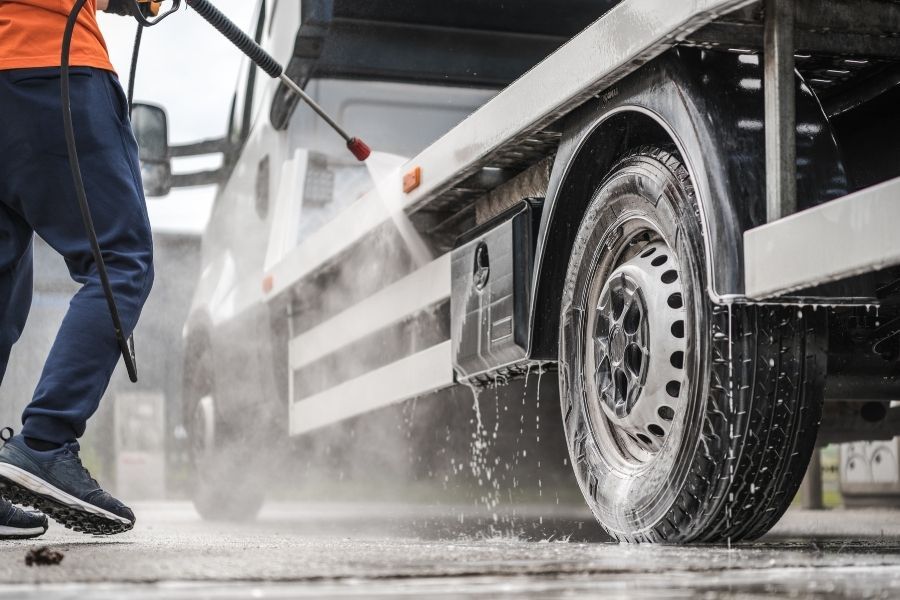
Washing at the yard means the vehicle never leaves and the driver never goes with it.
What a Wash Bay Trip Actually Costs
A wash bay visit costs you the wash price plus drive time, queue time, driver wages, fuel, and the hours that vehicle spends out of service. The invoice only shows you the first one.
Think about what a single trip involves. Somebody drives the truck to the facility, waits behind whoever got there first, waits again through the wash, then drives back.
Here is the full stack for one vehicle, one wash:
- Drive time to the facility and back
- Queue time, which is longest at exactly the hours fleets want to go
- Driver wages covering all of the above
- Fuel for the round trip
- The unit out of service the entire time
- Whoever coordinates the schedule, every cycle
None of that appears on the wash invoice. All of it comes out of your operation.
Look at the shape of it. The wash itself is a fixed price you agreed to. Everything around it is variable, invisible, and repeats on every vehicle in the yard, every cycle, all year.
That is why the trip cost usually beats the wash cost by the time you finish counting. Not because washing is expensive, but because an hour of a driver's day is worth more than most fleets stop to calculate.
The coordination piece is the one people forget. Somebody has to decide which trucks go and when, work around routes and dispatch, and chase it when a driver runs late or the facility is backed up.
That is a recurring administrative job disguised as a small errand. Across a fleet washed monthly, it never stops.
The Cost Nobody Puts on the Invoice
A truck at a wash bay is not delivering, hauling, or on a job site, and for a fleet running near capacity that is displaced revenue. Downtime reads as a soft cost until you are turning work away.
If your trucks are booked, every hour at a wash facility is an hour you could have billed. That math is worse than the driver wage math, and it never shows up anywhere you would notice it.
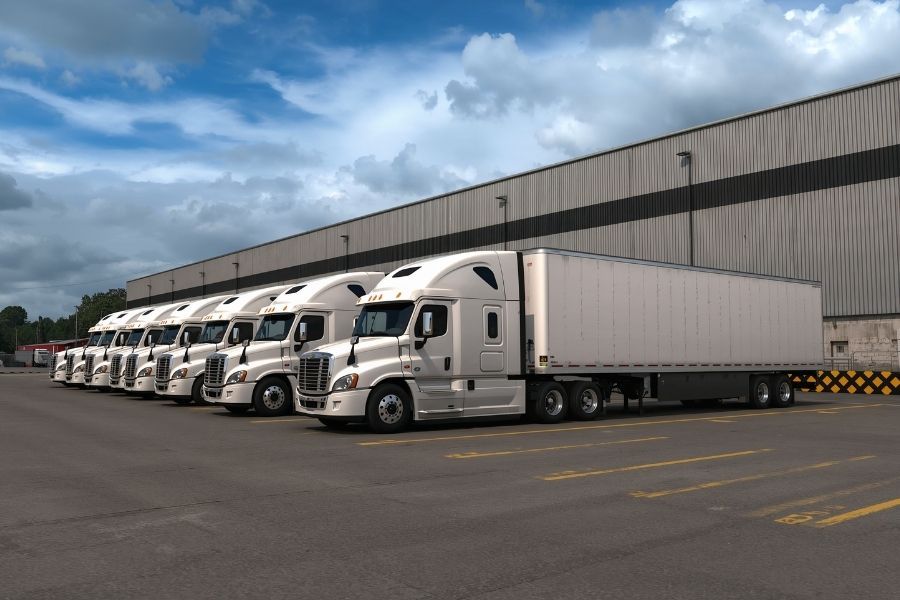
Every cost in the table multiplies by the number of units in the yard.
There is a second cost that is harder to see. Wash trips get scheduled into gaps that do not really exist, so they slip.
They slip once, then twice, and before long the fleet only gets washed when someone notices it has become embarrassing. Salt sits longer. Road film bakes on harder. The jobs get bigger and cost more, and the whole thing happened because washing was inconvenient rather than because anyone decided to skip it.
Skipped washes cost you something else too. A vehicle under a layer of packed road film hides the drips, cracks, and wear that a driver or mechanic would otherwise spot early.
Regular washing keeps those things findable. That is worth more than the appearance, and it only happens if washing is easy enough that nobody skips it.
What Changes When the Wash Comes to You
On-site washing removes the trip entirely, so the driver stays on the job and the vehicle stays in service. The equipment travels instead of the fleet.
We bring commercial hot-water pressure washing gear to your yard or facility anywhere in the Rochester area. Nothing leaves the lot.
Scheduling is where it compounds. We work overnight, early morning, and weekends, so vehicles get washed during hours they were parked anyway and are ready when drivers arrive. Every hour in that cost stack drops out, because nobody drives anywhere.
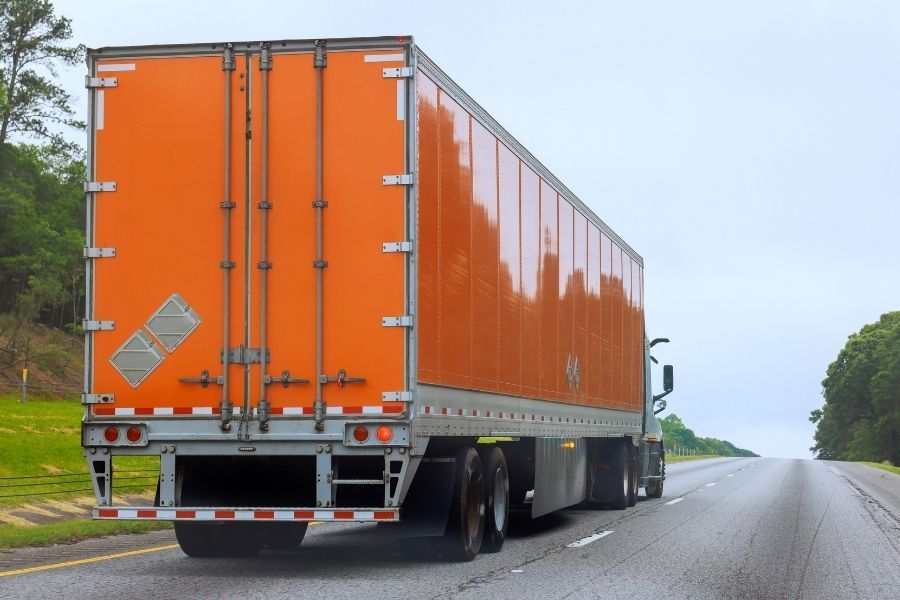
Trucks get washed while they are parked anyway, so the working day is untouched.
We service day cabs, sleeper trucks, flatbed and enclosed trailers, box trucks, construction equipment, delivery fleets, municipal vehicles, and utility rigs. Fleets of five or more get volume pricing, and every job comes with before and after photos for your records.
One more thing worth knowing. We are locally owned and family-run rather than a franchise, so when you call about a schedule change you reach the people doing the work.
When a Wash Bay Is Still the Right Call
On-site service is not the right answer for every operation, and there are cases where driving to a facility genuinely makes more sense. Worth being straight about them.
If you run one or two vehicles, the trip math barely registers. Ninety minutes once a month is an annoyance rather than an operational cost, and a service visit may not pencil out at that volume.
Yard access matters too. On-site washing needs somewhere to work and a water source, so a cramped lot with no hookup is a genuine constraint rather than something to talk around.
And if you wash twice a year, the logistics are not really the problem. Two trips is two trips. The argument in this post gets stronger the more often you wash and the more units you run.
How to Run the Numbers on Your Own Fleet
Take one vehicle, time the full round trip door to door, and multiply out from there. Most fleet managers have never measured it, which is exactly why the cost stays invisible.
Count these:
- Total round trip time, including the queue rather than just the wash
- Your loaded driver cost per hour, not the base wage
- Fuel for the trip
- Number of vehicles
- Washes per year
- Whether those hours displace billable work
Multiply it out. Then compare that total against a quote for having the work done at your yard.
Whatever you conclude, you will be deciding with the real number in front of you rather than the one on the invoice.
Frequently Asked Questions
Do you need our yard to have a water hookup?
Water access is worth sorting out before the first visit. Tell us about your setup when you request a quote and we will confirm what we need for your location.
How many vehicles do we need for on-site service?
Volume pricing starts at five vehicles. Smaller operations are still welcome, and we will quote either way once we know your vehicle types and location.
Can you wash outside our operating hours?
Yes. Overnight, early morning, and weekend scheduling is standard for us. Vehicles get washed while they are parked anyway, so nothing comes out of service.
What kind of vehicles do you handle?
Day cabs, sleeper trucks, flatbed and enclosed trailers, box trucks, construction equipment, delivery vans, municipal vehicles, and utility rigs. Mixed fleets are normal and we work through them in one visit.
Get a Quote for Your Yard
Run your numbers, then let us quote against them. Rochester Premium Cleaners is locally owned rather than a franchise, and we cover Rochester and roughly 50 miles out. See our full service area.
Call 585-350-5751 or request a free written estimate.